
Care sheet 05 of 06
Peruvian torch care through the year
A care sheet for Peruvian torch in a pot: full sun, a gritty mix, generous summer water, monthly feeding, a cool dry winter rest, repotting, pests and rot.
Updated
- Light Full sun, the more the better
- Water Generous in summer, dry in winter
- Cold Winter nights 8 to 10 °C
A Peruvian torch in a pot needs as much sun as you can give it, a gritty, free-draining mix, thorough watering whenever the mix has dried out from spring to early autumn, a monthly high-potassium feed in the growing season, and a cool, bright, almost dry rest from November to the start of March. That rhythm is the one the Royal Horticultural Society gives for cacti in its cactus and succulent growing guide, and it suits this Andean column well. The quotes on this page come from that guide unless stated otherwise.
Light
Give it the sunniest spot you have: a south-facing window, a conservatory or a greenhouse. The RHS advises putting cacti "on a sunny windowsill all year round", and they can go outdoors in summer. Move a plant outdoors gradually, a few hours of direct sun at first, because a stem that has spent the winter indoors can scorch when it meets full summer sun all at once.
Light also changes how the plant looks. Albesiano and Kiesling observed that spine number and size in this species are "very much affected by light intensity", and that a plant moved from a shady to a more exposed position grew more spines (Haseltonia, 2012). A Peruvian torch in strong light shows the heavy spine clusters described on the identification sheet; in poor light the new growth comes out narrower, paler and less spiny.
Soil and pots
The RHS mix for cacti is "2 parts by volume of peat-free John Innes No 2, with 1 part horticultural grit or sharp sand mixed in." Many growers add extra pumice or perlite for a tall plant in a large pot, which dries out more slowly in the middle.
- Use a pot with drainage holes, and never leave it standing in a saucer of water.
- Repot in spring. The RHS warns: "Avoid repotting into too large a pot as the excess volume of soil can stay too wet and cause rot." One size up is enough.
- A column becomes top-heavy. Clay or stone pots are heavier and more stable than plastic.
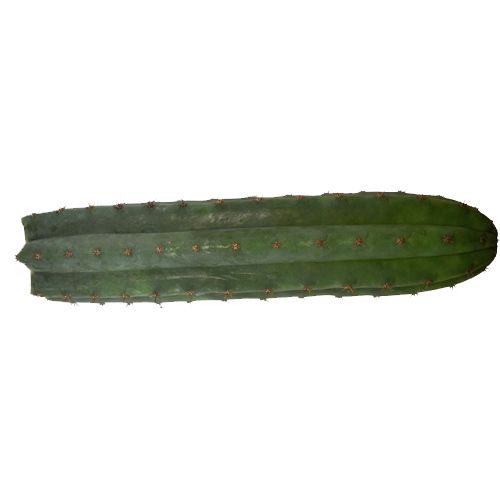
Peruvian Torch 25–30 cm - Trichocereus peruvianus
View at Dutch-Smart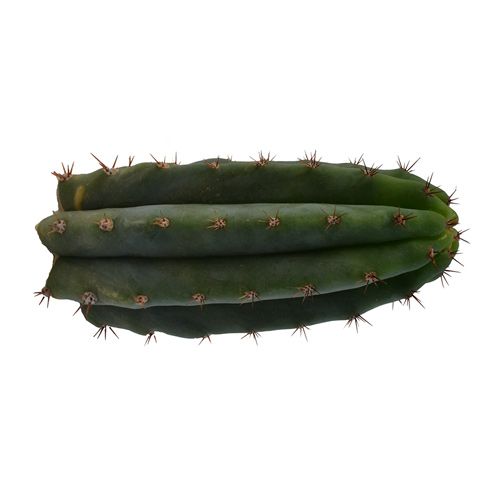
Peruvian Torch - Trichocereus peruvianus
View at Dutch-SmartWatering
In spring and summer, water thoroughly "once the surface of the compost feels dry to the touch", let the excess drain away, and do not let the mix dry out for long periods while the plant is growing. How often that is depends on heat, light and pot size, so let the mix decide.
From November to the beginning of March the plant rests, with "minimal or no watering. Water should only be given if necessary, to prevent the plants shrivelling." A slight wrinkling of the stem by late winter is normal and usually disappears once watering starts again in spring.
Feeding
Feed once a month from April to September, with a liquid feed high in potassium such as tomato feed, or a specialist cactus feed. Stop feeding in autumn.
Winter rest and cold
The rest period is what keeps a potted cactus compact and sturdy. The RHS recommends a bright place with a night temperature of only 8 to 10 °C (46 to 50 °F). An unheated but frost-free greenhouse, a cool spare room or a bright stairwell all work. A plant kept warm and watered through winter keeps growing in poor light and produces thin, weak stem sections.
The species comes from Andean valleys at 2,000 to 3,000 metres, and according to Plants of the World Online, as summarised on Wikipedia, it has become naturalised in mainland Spain and on the Balearic and Canary Islands. We found no reliable published minimum temperature for the Peruvian torch itself, so for a potted plant in northern Europe the safe course is to keep it dry and frost-free from autumn to spring. Wet compost in cold weather is the combination to avoid.
Pests
The RHS names three common pests of cacti grown indoors:
- Mealybugs: small white, waxy tufts in the areoles and at the base, often where spines are dense.
- Red spider mites: fine webbing and a dull, mottled stem surface, mainly in warm, dry air.
- Scale insects: small brown or white bumps that do not wipe off easily.
Check the plant every few weeks in summer, and look closely between the spine clusters where pests hide. Isolate a new plant for a couple of weeks before it joins the others.
Rot
The RHS warns that "overwatering can damage roots and cause stunted growth, blistering and rotting." In a Peruvian torch rot often starts at the base: the stem goes soft, dark or wet-looking just above the soil. If the top of the plant is still firm, cut it off well above the damage, let it callus and root it again as a cutting; the cuttings sheet explains how.
The year at a glance
| Months | Light | Water | Feed | Other |
|---|---|---|---|---|
| November to February | bright and cool | none, or a little if the stem shrivels | none | rest at 8 to 10 °C at night |
| March | bright | start lightly at the end of the month | none | repot if needed |
| April to June | full sun, outdoors after hardening off | thoroughly when dry | monthly | cuttings and grafts from May |
| July to September | full sun | thoroughly when dry | monthly | check for pests |
| October | full sun while it lasts | less, then stop | none | bring potted plants in before frost |
Next: take a cutting · sow seed · what to buy